


Diffractometer
Positioning of the Sample and the Detector
PROJECT BACKGROUND
The ESRF synchrotron offers the most advanced facilities, enabling industrial companies and research laboratories to conduct their experiments at the atomic scale.
The CRG-IF BM32 research group specializes in the study of interfaces and surfaces in air or under ultra-high vacuum using X-ray scattering techniques.
This line is dedicated to a team composed of scientists from the French Alternative Energies and Atomic Energy Commission (CEA) and the National Center for Scientific Research (CNRS).


CUSTOMER REQUEST
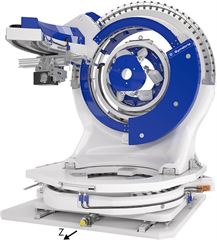
The joint CEA-CNRS team had been using a diffractometer that was more than 20 years old to study the growth of nanostructures on surfaces. They chose Symétrie to provide them with a more powerful instrument.
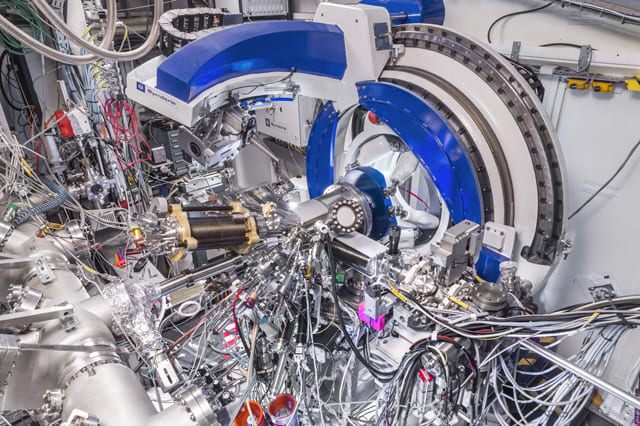
This new diffractometer performs two main functions:
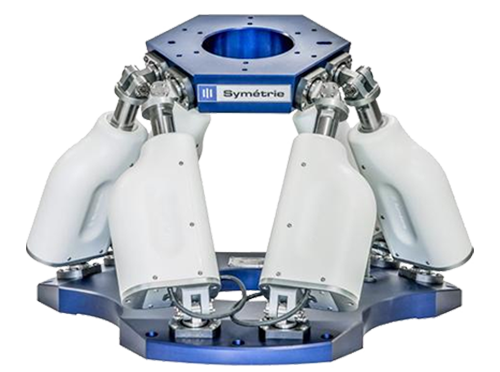
■ Sample positioning: The sample is placed in the beam path and can move in six degrees of freedom using a BREVA hexapod to adjust the beam’s angle of incidence.
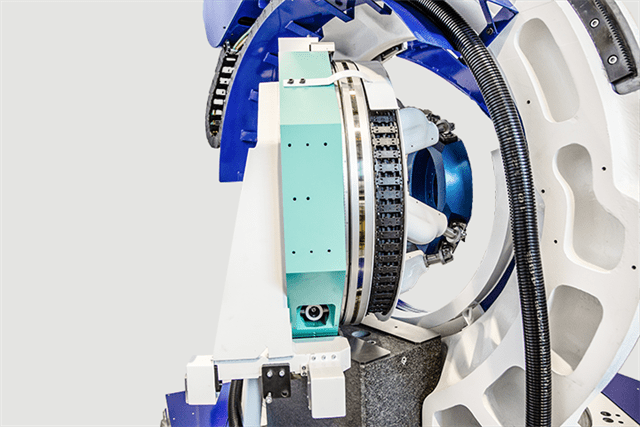
■ Detector positioning: To capture the diffracted X-rays that characterize the sample’s crystallographic structure, a detector moves along a spherical surface around the sample.
PROJECT SPECIFICATIONS
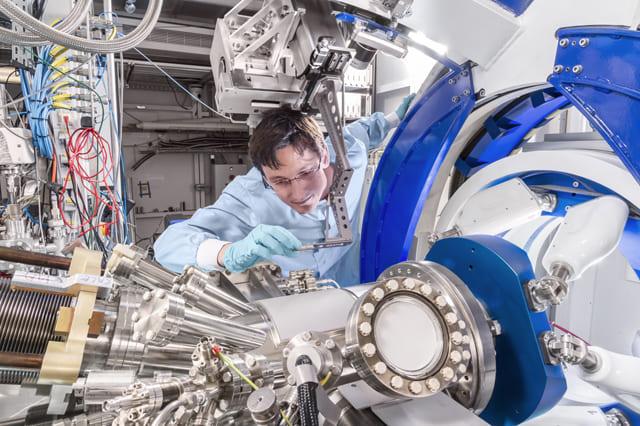
■ Easy access to the ultra-high vacuum chamber
■ Sensor arm speed: 20°/s
■ Sample confusion sphere: 50 µm
■ Detector confusion sphere: 100 µm
■ Hexapod resolution: 1 µm, 0.001°