

Hexapod for robotic arm
A complete solution combining velocity, amplitude, stiffness and accuracy
Expertise recognized worldwide













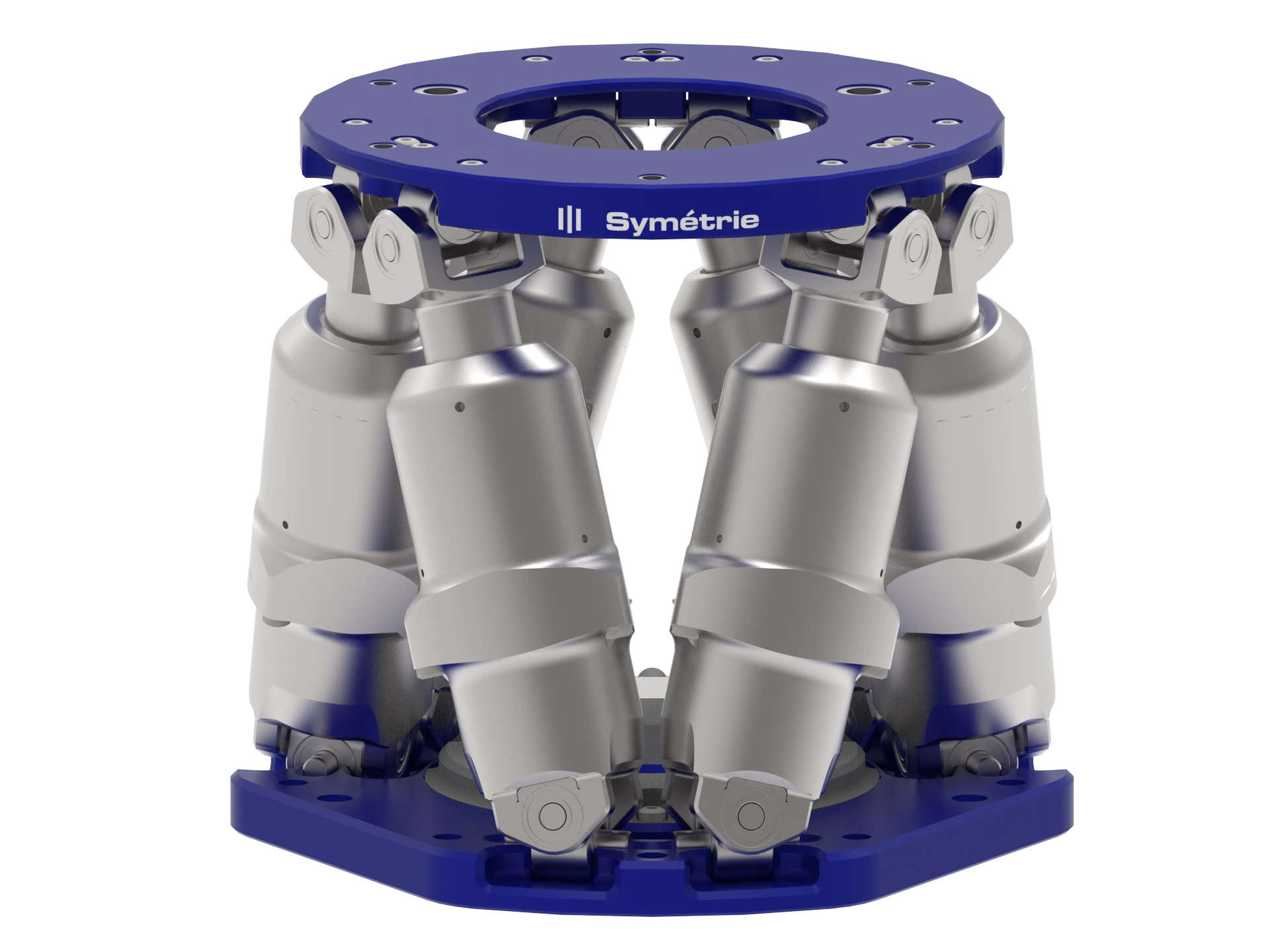
Hexapods for robotic arms
Pairing a robotic arm with a hexapod combines the best of both worlds: the reach and speed of a serial robot with the precision and rigidity of a parallel mechanism.
The arm ensures rapid global positioning, while the hexapod performs micrometric adjustments and orientation corrections in real time. This kinematic complementarity paves the way for high value-added applications such as precision machining, optical calibration, high-tolerance assembly, adaptive polishing and automated inspection.
Thanks to this hybrid architecture, the robotic cell gains in precision, flexibility and responsiveness, while reducing calibration times and increasing process quality.
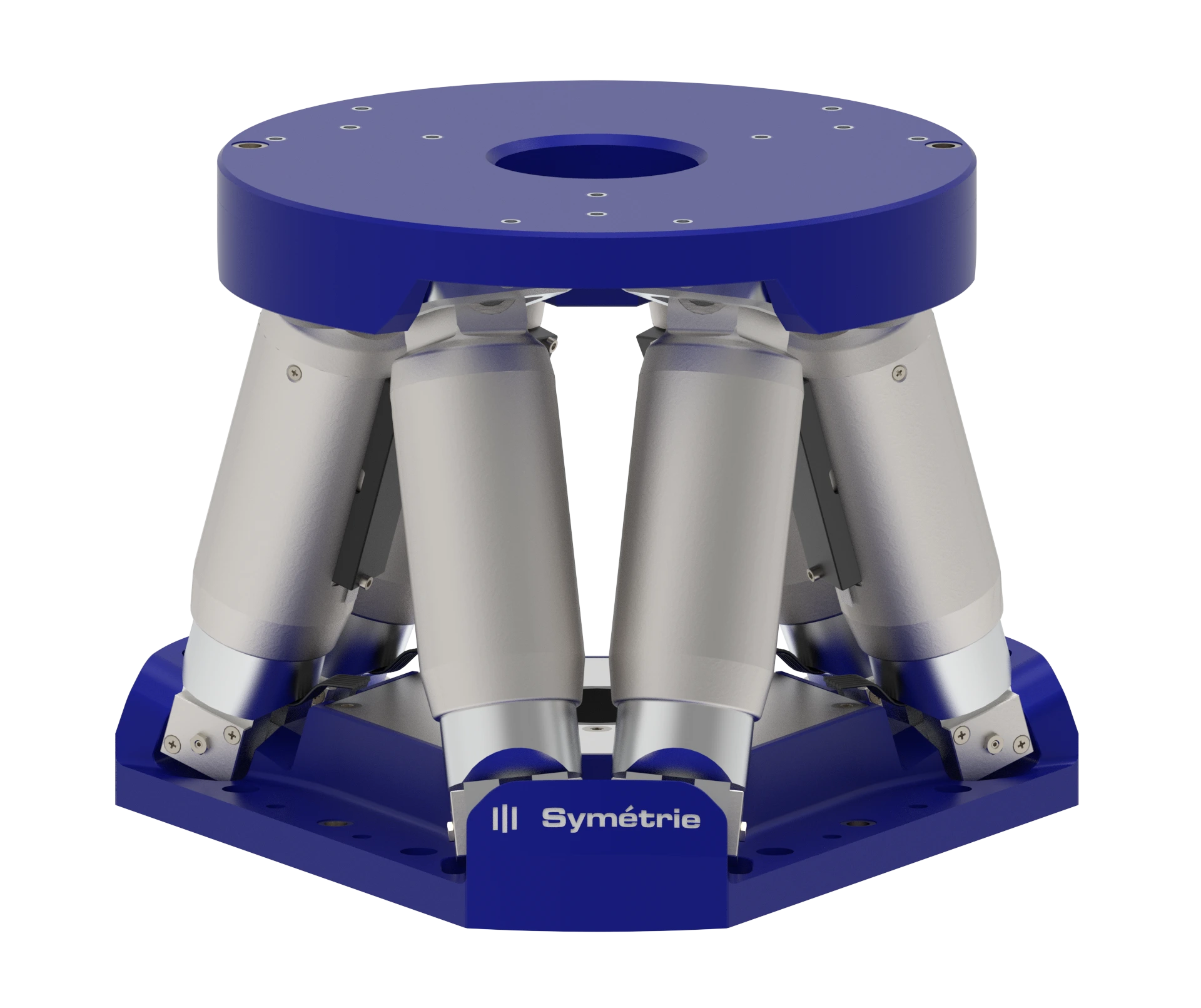
HEXAPOD VS ROBOTIC ARM
Although these two positioning solutions are often compared in industrial fields, they have many differences and address specific needs.
| Critère | Hexapode | Robot sériel |
| Degrés de liberté | 6 DDL simultanés (Tx, Ty, Tz, Rx, Ry, Rz) | Axes empilés indépendants |
| Rigidité | Très élevée (structure fermée) | Plus faible (axes superposés) |
| Encombrement | Compact et intégré (axes superposés) | Plus volumineux (axes empilés) |
| Précision | Excellente répétabilité | Cumul d'erreurs des axes |
| Cinématique | Parallèle | Sérielle |
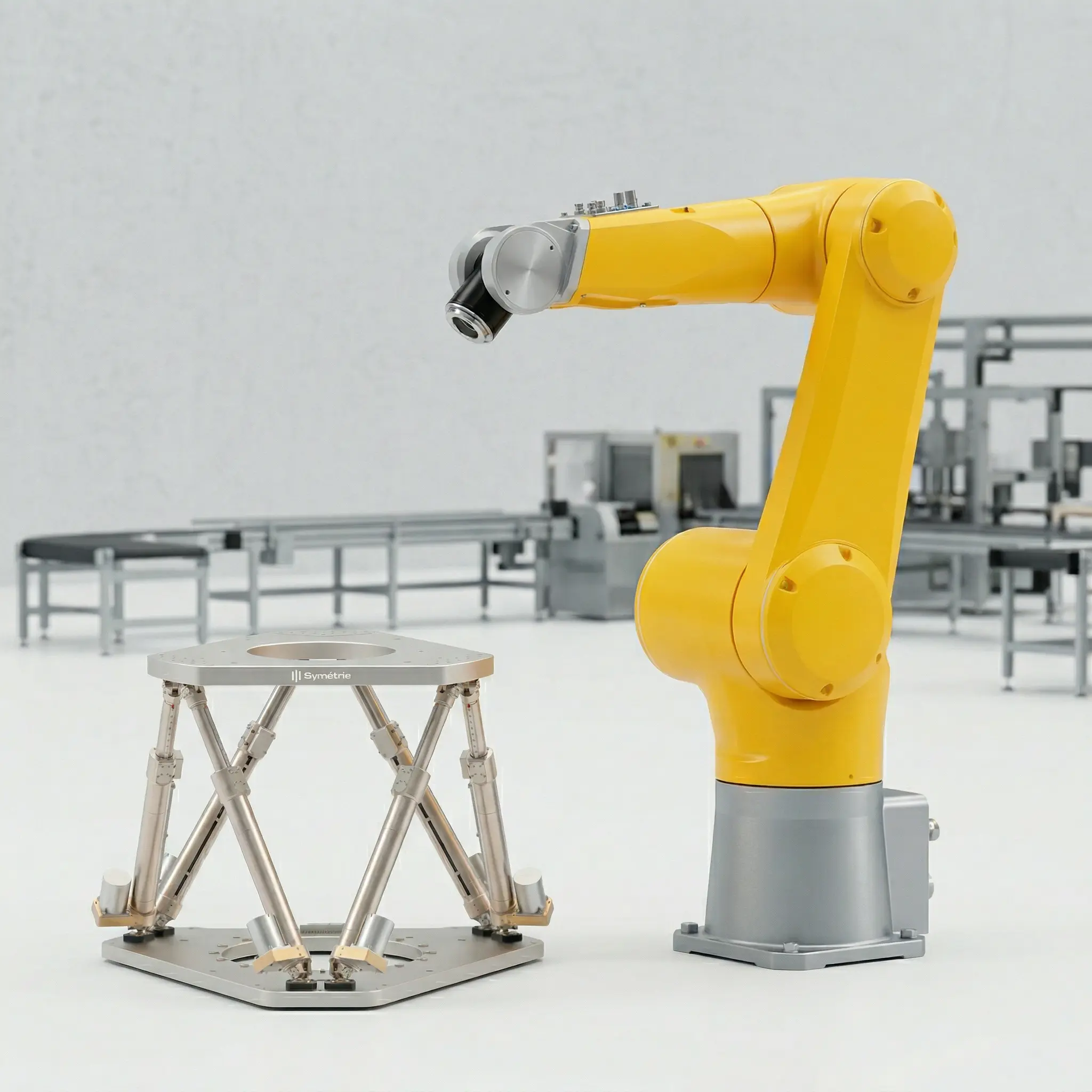
HEXAPOD & ROBOTIC ARM: A HYBRID ARCHITECTURE
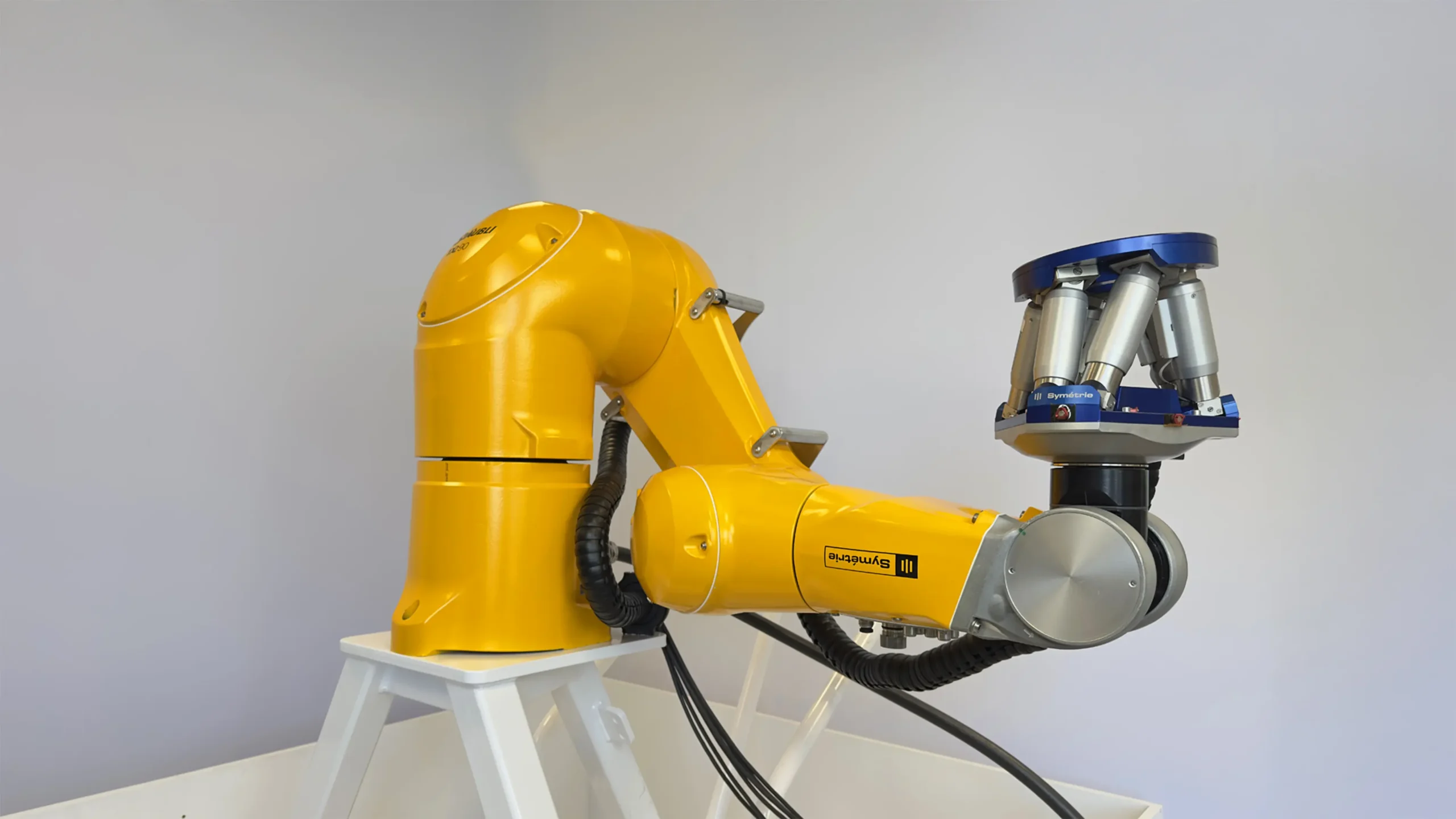
Combining a robotic arm with a hexapod allows us to bring together the best of both worlds: the reach and speed of a serial robot with the precision and rigidity of a parallel mechanism.
The arm ensures rapid overall positioning, while the hexapod performs micrometric adjustments and orientation corrections in real time. This complementary kinematic design paves the way for high-value-added applications: precision machining, optical calibration, high-tolerance assembly, adaptive polishing, and automated inspection.
Thanks to this hybrid architecture, the robotic cell gains in precision, flexibility, and responsiveness, while reducing calibration times and improving process quality.
Symétrie, hexapod expert for 25 years
Our precision positioning experts are here to answer your technical questions and help you choose the solution best suited to your application.
FAQ
What kinds of movements can the Symétrie hexapod perform?
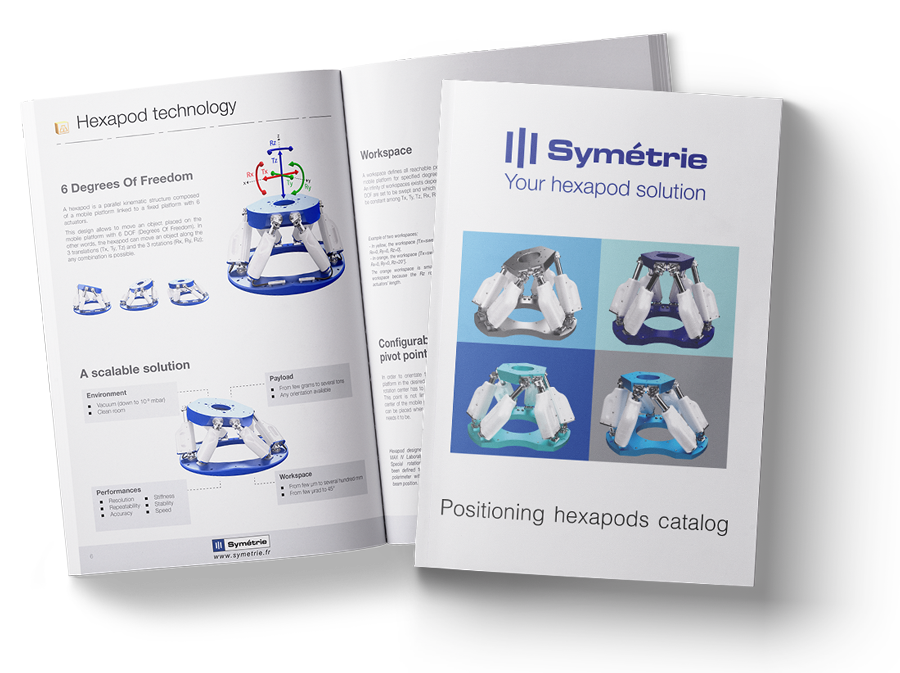
The hexapod can perform combined movements across its six degrees of freedom: three translations (X, Y, Z) and three rotations (Rx, Ry, Rz). This flexibility allows for complex adjustments that would be impossible with conventional guidance systems.
What is the accuracy or resolution of the movements?
Our hexapods achieve resolutions of around 50 nm for linear motion and a few microradians for rotational motion. Repeatability is one of our key strengths, ensuring the accuracy of every positioning operation.
What materials are used to make the hexapod?
We use high-performance materials such as anodised aerospace-grade aluminium, stainless steel and components specifically designed for demanding environments (vacuum, cleanroom, non-magnetic).
Is it compatible with different software or control systems?
Absolutely. We provide function libraries (SDKs) compatible with LabVIEW, C++ and Python, as well as specific interfaces for research environments such as EPICS and TANGO.
Is the hexapod safe for use in laboratories or in industry?
Safety and reliability are at the heart of our design. The software features configurable travel limits, virtual collision detection and hardware safety features to protect your equipment and samples.
Can’t find the answer to your question?
Send us your enquiry and one of our experts will get back to you as soon as possible.